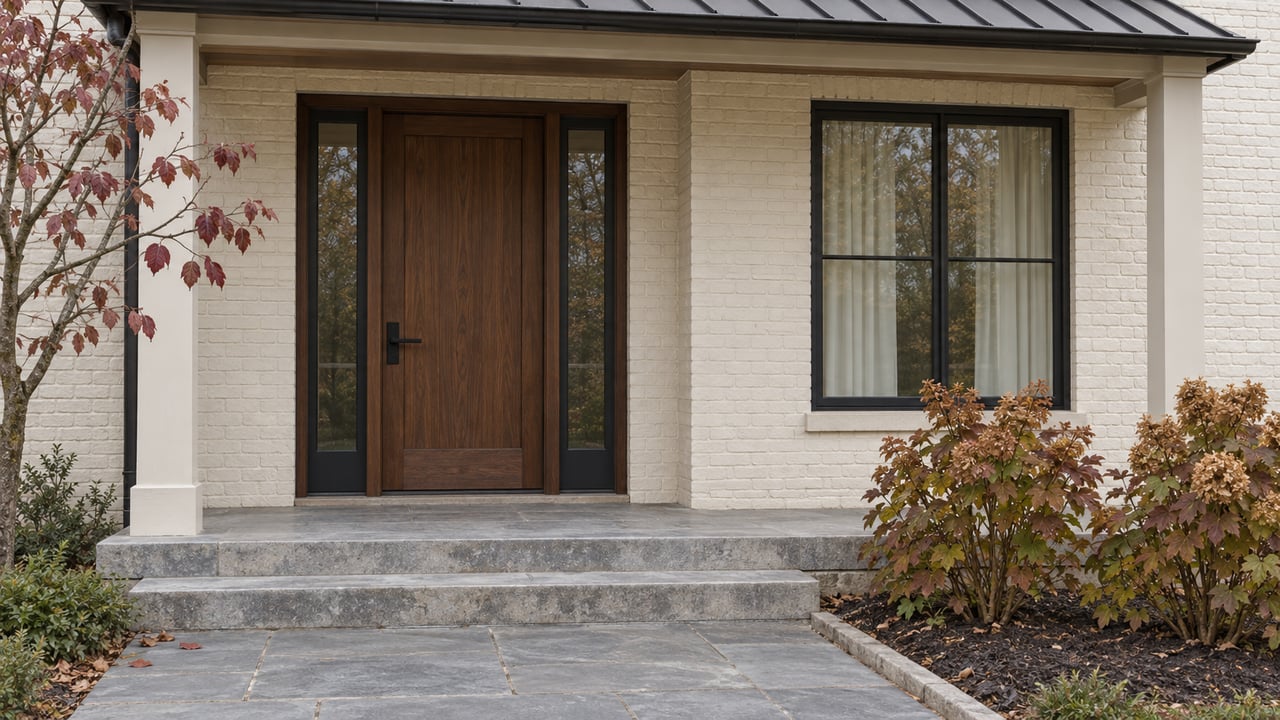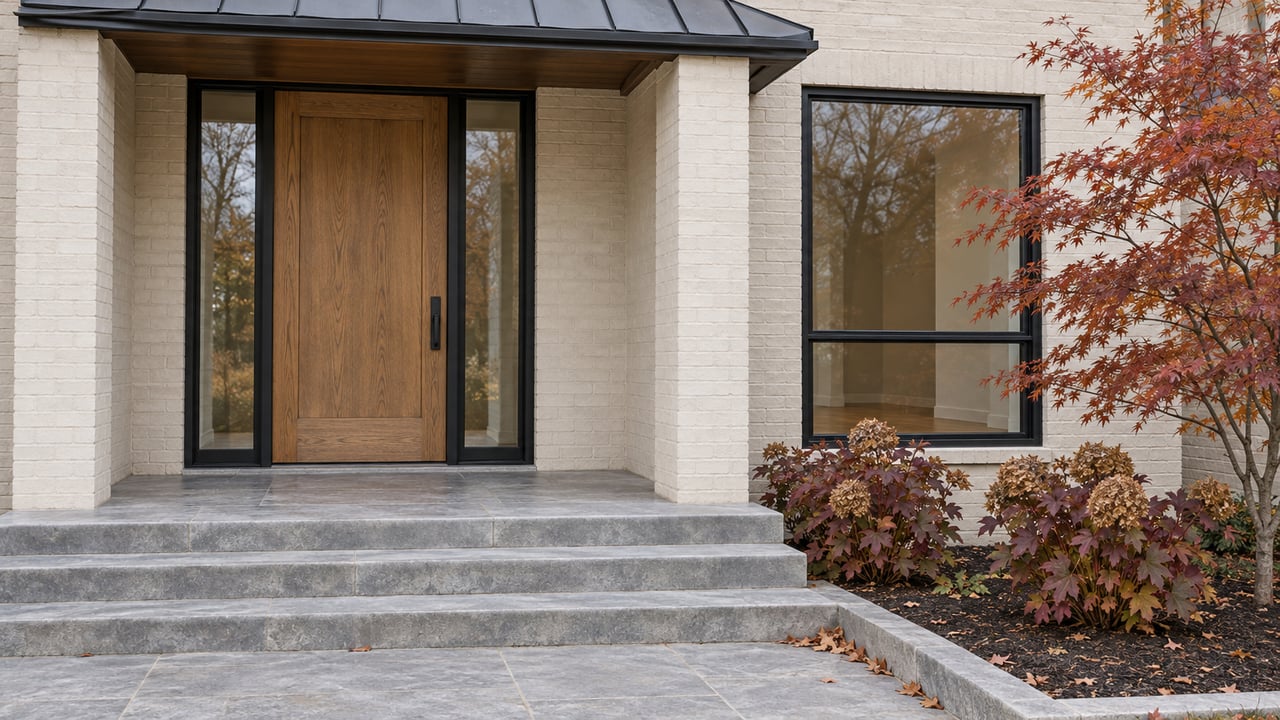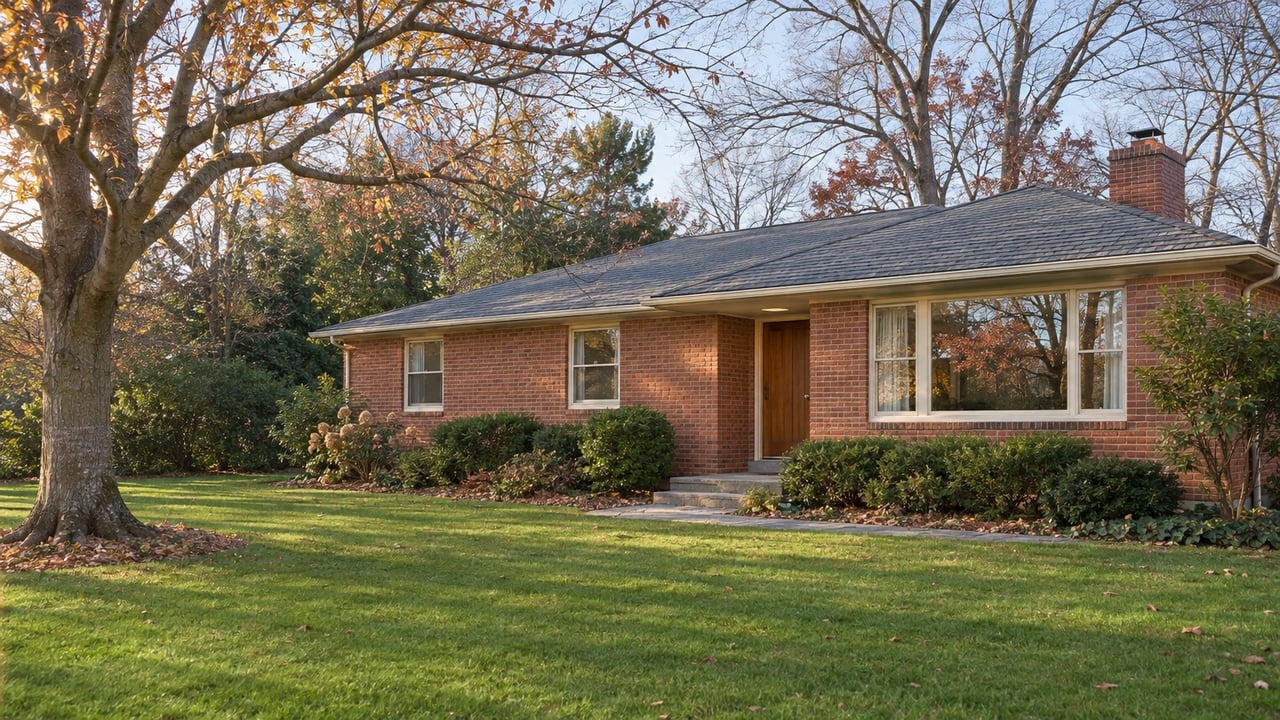
In May 2024, a house on Essex Avenue in the Town of Somerset sold for $1.25 million. The town's own sales records list it as a teardown. In January 2026, the new house built on that lot sold for $4 million. It has six bedrooms, six baths and about 5,900 square feet across an 8,750-square-foot lot.
The Essex Avenue sale is a typical one for Somerset now. The town is a small municipality of about 440 houses with a Chevy Chase, 20815 mailing address. Over the past year the town's Development Committee has assembled the clearest public record of how its housing market works. According to that record, the price of an original Somerset rambler, colonial or split-level is set by what a builder could sell on its lot, and the house itself counts for much less.
Four lots, before and after
The committee's sales log covers September 2023 through August 2026 and draws on Bright MLS data. For several lots it pairs the price a builder paid for the old house with the price the new one later brought.
| Street | Teardown purchase | New home sale | Spread before construction costs |
|---|---|---|---|
| Essex Avenue | $1.25M, May 2024 | $4.0M, Jan. 2026 | $2.75M |
| Falstone Avenue | $1.4M, Aug. 2024 | $3.568M, Feb. 2026 | about $2.17M |
| Trent Street | $1.1M, Apr. 2023 | $3.0M, Jan. 2026 | $1.9M |
| Cumberland Avenue | $1.2M, Nov. 2022 | $4.05M, July 2025 | $2.85M |
The spreads don't include construction, design, carrying or selling costs, so they overstate a builder's profit. In its September 2026 meeting packet, the committee's minutes put it more simply. Developers are active in Somerset and Chevy Chase "generally because they can purchase for $1.6m and sell for $4.5m, gaining a major return on investment, even after construction costs."
That return explains the rest of the market. Each of these builders sees the same thing: a lot with an older house on it sells for a bit more than $1 million, and a finished house on the same lot sells for $3 million to $4 million. As long as that gap holds, builders will keep bidding, and any original house on a buildable lot is priced against their offer.
The small houses carry the highest price per square foot
Price per square foot shows this most plainly. In theory a modest 1950s house should cost less per foot than a brand-new one with a finished lower level, wide-plank floors and a modern kitchen. In Somerset the reverse holds.
The Essex Avenue new build sold at about $674 a square foot. The new house on Falstone Avenue sold at about $622. A 1958 mid-century house on Grantham Avenue, at roughly 1,479 square feet on an 11,761-square-foot lot, sold for $1.6 million in late 2025. That works out to $1,082 a square foot, and the committee lists it as a teardown in progress. A 1,552-square-foot rambler on Warwick Place sold in June 2026 for $1.325 million, about $854 a foot.
A smaller house shows a higher per-foot number because the price is mostly paying for the land under it. The building is close to a rounding error. This changes how comps work here. If you compare a 1,600-square-foot rambler to a renovated 3,300-square-foot colonial on a per-foot basis, the rambler will look overpriced. It isn't. The two houses are priced on different terms.
What a buyer is competing against
The committee's minutes describe more than one kind of buyer for Somerset's original-scale houses. Developers are one. Others include downsizers who want a single-family house in the town, mid-career two-earner households for whom an entry-level Somerset house still works, and households buying with family help. The minutes also note that some sellers choose to sell straight to a developer for convenience, and those houses never reach the open market.
So an owner-occupant shopping in the $1.1 million to $1.7 million range, where the committee places near-original-scale sales, is bidding against someone whose math ends at $3.4 million to $4.5 million, the range it gives for teardown and rebuild sales. The builder has no reason to overpay. A builder's ceiling for the lot is high, though, and it acts as a floor under the price of any original house that would make a good build site.
The 2026 sales show both kinds of outcome. Through August, Somerset recorded 11 sales. Four were original-scale houses under about $1.65 million and five were new houses built after a teardown. One of the original-scale sales was a 1957 rambler on Falstone Avenue with 2,550 square feet on one level. It listed in November 2025 at $1.385 million and sold in March 2026 for $1.395 million. Another was a 1950 rambler on Warwick Place with an enclosed porch addition. It was first listed in September 2025 at $1.279 million and sold in May 2026 for $1.215 million. Neither sold quickly, and neither sold far from its land value. That's a useful anchor for both sides of a negotiation.
The pace is picking up
The committee's November work plan sets a baseline of about 36 teardowns and rebuilds in Somerset between 2005 and 2025, or 18 per decade. In the most recent 36 months there were 10, nearly double that long-run pace, and the committee expects the trend to keep rising through 2036. It also notes that teardowns tend to happen in clusters.
The new houses are also much larger than the ones they replace. In preliminary comparisons, the committee found recent projects exceeding the original scale of homes on their blocks by 432% on Greystone Street, 353% on Essex Avenue and 340% for the second proposal on Grantham Avenue.
Mayor Rohit Khanna, a Somerset resident since 1999, put the town's concern in visual terms in the October issue of the Somerset Town Journal. Looking out over the treetops, he described a "bald patch" where four homes now cluster where trees once stood. "At the current rate of teardowns," he told the Journal, "that's what Somerset could look like in twenty years."
The town is reviewing the rules on house size
The Development Committee was created to study whether the town's building code should be amended so that new houses fit their lots and streetscapes in scale and mass. Its November work plan lists case studies on Greystone Street and Grantham Avenue. It also records that residents described the larger new houses as cutting into openness, sunlight and mature tree canopy. Separately, the Town Council introduced an ordinance amending its building regulations on Oct. 5 and placed adoption, along with a stormwater ordinance, on its Nov. 2 agenda.
Every price in this post rests on one market fact: a new house of roughly 5,700 to 6,000 square feet sells for $3 million to $4 million on a typical Somerset lot. House size is the subject of the town's review. A buyer paying close to land value with plans to rebuild or expand is pricing that upside while the town's discussion is still underway, and the committee's packets and council agendas are posted on the Town of Somerset website.
Why the gap holds while the county cools
Montgomery County as a whole is not running hot. In October 2026, the county's median sale price across all home types was $617,778, up 0.4% from October 2025. Median days on market rose six days to 19, and months of supply rose to 3.1, according to the Greater Capital Area Association of Realtors' October 2026 report.
Bright MLS's October 2026 housing market release explains why a $4 million new house in Somerset can still sell in that market. Lisa Sturtevant, Bright's chief economist, said that buyers were holding back with rates above 7%, but that "higher-income buyers and cash buyers are still in the market." First-time and moderate-income buyers are the ones having the hardest time.
The buyers who can still act are concentrated at the top of the price range, and the builder's exit price sits at the top of the range. Higher rates squeeze the household trying to buy a $1.3 million rambler far more than the household paying $4 million for the new house next door. That keeps the builder's offer competitive at the lower end of the market.
For sellers and buyers of original houses
If you own an original-scale house in Somerset, the town's sales log shows two groups of buyers for your property: owner-occupants who want the house, and builders who want the lot. Your lot's size, shape and the scale of the houses around it shape the builder's price. The committee's note that some sales go straight to developers without reaching the open market is worth weighing when you decide how to sell.
If you are buying, Somerset's original houses are best priced as land with a house on it. That changes the calculation on renovation. A buyer who pays close to land value and then renovates or expands is betting on a finished value somewhere below a new build's $3 million to $4 million. That bet depends on finish quality, layout and how much the town eventually allows. For general context on the surrounding area, the Chevy Chase neighborhood page and the recent piece on what is opening in Friendship Heights cover the wider area around the town.
If you're weighing whether to renovate, expand or sell an original Somerset house, or working out what a lot like yours is worth to a builder, Mandana Tavakoli would be glad to go through the recent sales on your street with you before you decide. Let's Connect.