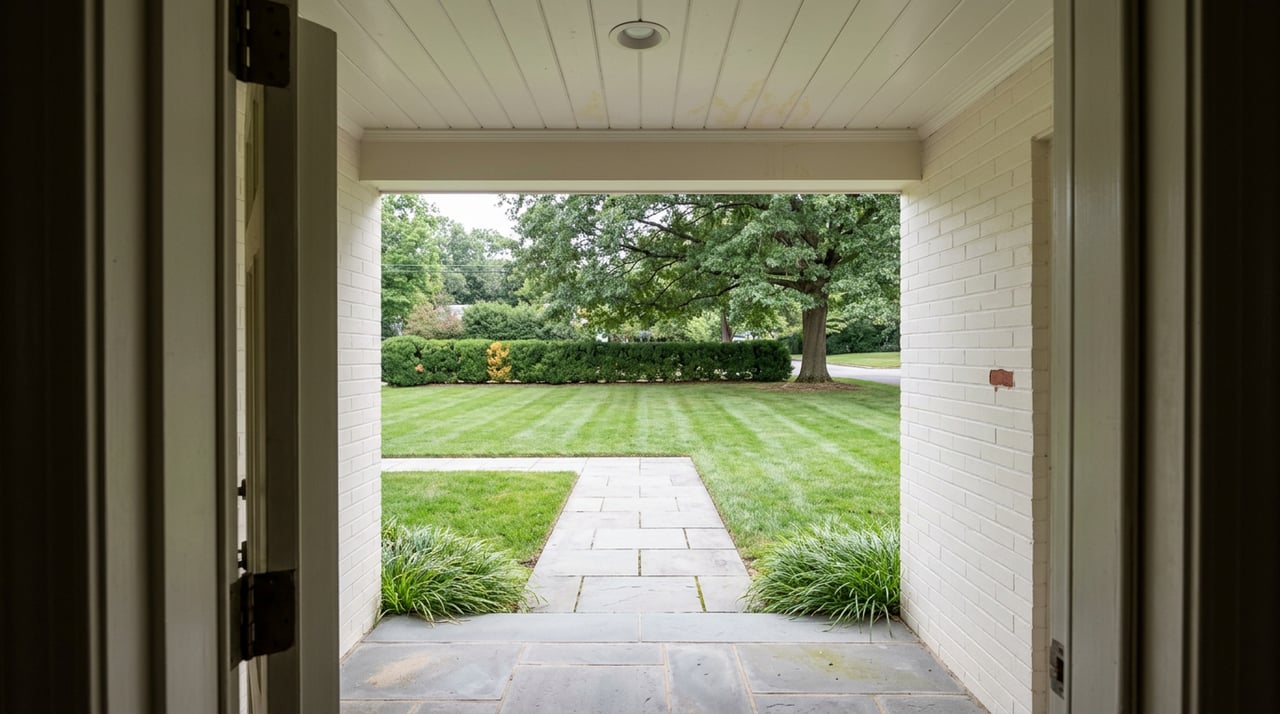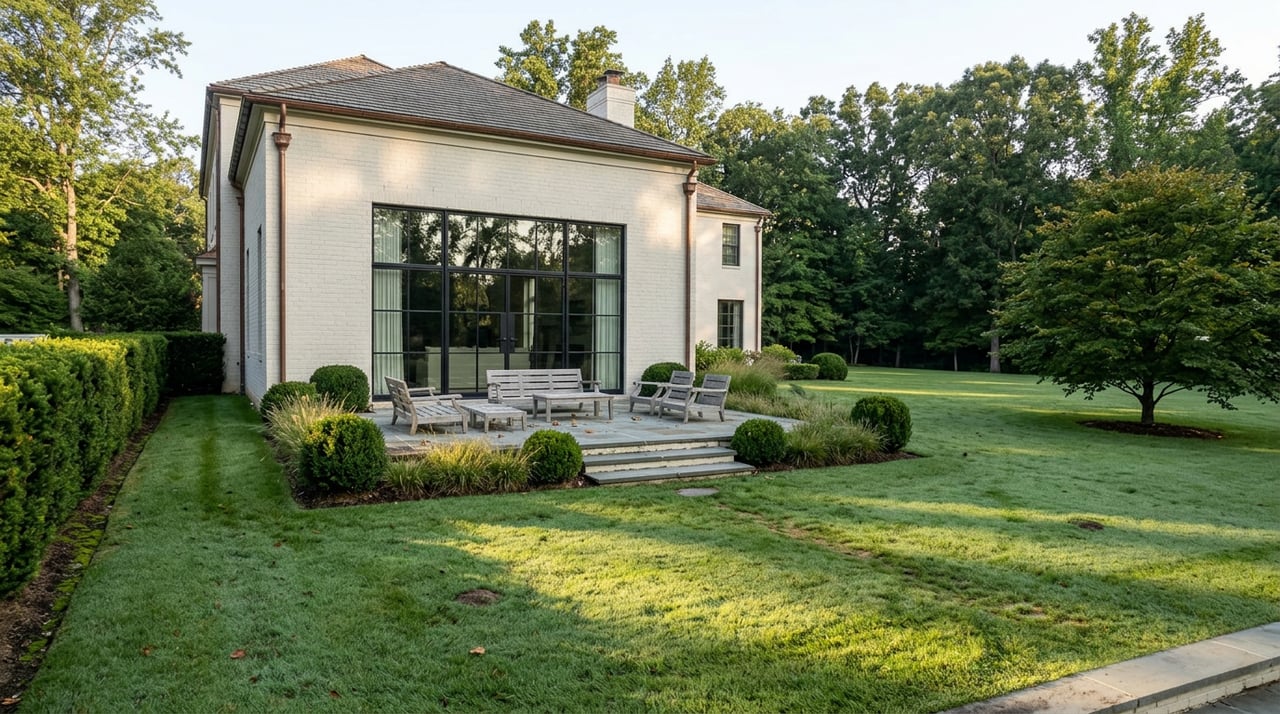
A buyer walks a two-acre lot in Great Falls, sees mature oaks framing a stone facade, and starts sketching a primary suite over the garage in her head before she's back in the car. The lot practically begs for it. Two acres is enormous by DMV standards. There's room for a pool, a guest house, maybe a barn if the horses ever happen.
Then her agent asks a question that has nothing to do with acreage: how many bedrooms is the septic system permitted for.
That question can matter more than the deed's lot dimensions when determining whether that addition can be built. In a community defined by some of the largest residential lots in the region, septic systems are designed and permitted based on bedroom count and wastewater capacity, the Great Falls Citizens Association explains; a major limit on expansion sits underground, in a drainfield sized for a bedroom count that was fixed years or decades ago.
The Number the Lot Line Doesn't Tell You
Great Falls is zoned primarily Residential Estate under Fairfax County's Comprehensive Plan, which preserves the low-density, semi-rural character the community is known for. What that zoning does not guarantee is unlimited flexibility to build. Because Great Falls has no separate town government, every building permit, zoning review, and inspection runs through Fairfax County's Department of Land Development Services, and for the majority of homes here, that review includes the Health Department.
Here's the mechanism: septic systems are designed and permitted based on bedroom count and wastewater capacity, not square footage or lot size. Add a bedroom to a home served by a private system, and, according to DLA Design Build, Fairfax County typically requires a review to confirm the existing drainfield can handle the increased load. That review happens whether the lot is two acres or twenty.
This is why builders working in Great Falls plan around the septic system before they finalize a floor plan, not after. Well location and required setbacks from structures, septic components, and impervious surfaces shape where an addition can physically sit, and second-story additions are often the preferred move specifically when a lot's septic or well constraints limit how far a ground-floor footprint can expand.
Not Every Great Falls Lot Plays by the Same Rules
Utility service in Great Falls varies parcel by parcel. Some estates connect to public water and sewer. Most rely on private wells and septic systems, and confirming which situation applies to a specific address requires checking with Fairfax Water and the county's Health Department rather than assuming based on the neighborhood's reputation.
That inconsistency matters for anyone comparing two Great Falls listings on paper. A $2.5M estate with public water and sewer access carries a fundamentally different expansion ceiling than a $2.5M estate a half mile away running on a decades-old septic system, even if the square footage and lot size look nearly identical in a listing sheet.
The County's 2026 Accessory Living Unit Study
Earlier this year, Fairfax County opened public outreach on a study of expanded Accessory Living Unit allowances. The Great Falls Citizens Association's Land Use and Zoning Committee took up that study at its February meeting, specifically because of how it interacts with local conditions.
Many homes rely on private wells and almost all have septic systems rather than public water and sewer infrastructure.
That's the crux of the concern from the Great Falls Citizens Association, a nonprofit that has represented residents on land use and zoning issues for years. An accessory living unit sounds like a straightforward way to add flexibility, a guest suite, a space for aging parents, a rental unit. But in a community where septic capacity is tied to bedroom count, adding a second dwelling isn't just a design decision. It's a wastewater capacity question first. At the time of that committee review, a more detailed staff report was anticipated by late summer, with possible action by the Board of Supervisors to follow before the year is out.
If you're evaluating a Great Falls property with an eye toward adding an accessory unit down the road, this is worth tracking now, not after you've closed. For Great Falls properties on private systems, the study raises questions about septic capacity.
What This Actually Costs to Find Out
Before any of this becomes an architect's problem, it's a due diligence problem, and due diligence in Great Falls has real numbers attached.
| Task | Typical Cost Range |
|---|---|
| Septic pump-out and inspection | $300 to $700, plus $150 to $450 for inspection |
| New well drilling or replacement | $3,000 to $15,000, depending on depth and geology |
| Drainfield replacement or alternative system | Several thousand to tens of thousands, depending on soil conditions and design |
None of these numbers show up on a listing sheet. They show up during the inspection period, and by then a buyer has usually already fallen for the house.
What This Means If You're Comparing Great Falls to Other Estate Markets
For move-up and luxury buyers weighing Great Falls against other close-in estate markets, the acreage story is only half the picture. The typical single-family home value in Great Falls stood near $1.63M as of January 2026, with high-end listings often above $2M, and that price buys privacy, tree cover, and proximity to the Potomac. It does not automatically buy room to grow.
A few steps make the difference between a smooth close and a mid-renovation surprise:
- Request the well completion report and recent water quality lab results before writing an offer, not after.
- Ask for septic permit records showing the bedroom count the system was designed for, and compare that to what you actually plan to use.
- Confirm whether the parcel has public water or sewer access, or verify well and septic status directly with the seller and the county.
- If an accessory unit or guest suite is part of your long-term plan, ask now whether the existing system has any capacity to support it, and watch how the county's ALU study develops through the rest of 2026.
None of this should discourage anyone drawn to what Great Falls offers. It should just reset which number to interpret first. The lot line tells you how much land you own. The septic permit is one important factor in how much house you can add.
A Few Questions Worth Asking Early
Does every home in Great Falls use well and septic? No. Utility connections vary by parcel. Some estates have public water and sewer, most rely on private systems, and the only way to know for certain is to check the specific address with Fairfax Water and the county Health Department.
What does adding a bedroom to a home on septic in Great Falls involve? Fairfax County typically requires a Health Department review of the existing drainfield's capacity first.
Will the county's Accessory Living Unit study change anything? As of the Land Use and Zoning Committee's review earlier this year, the study was still in the information-gathering phase, with a staff report anticipated by late summer and possible Board of Supervisors action to follow. The Great Falls Citizens Association is tracking it closely because of how it intersects with septic capacity in the community.
If you're comparing Great Falls to Potomac, McLean, or another close-in estate market and want a clear read on what a specific property can actually support, not just what its lot size suggests, Mandana Tavakoli can help you ask the right questions before you write an offer.
This article is general information, not legal, tax or financial advice. Consult a qualified professional about your situation.